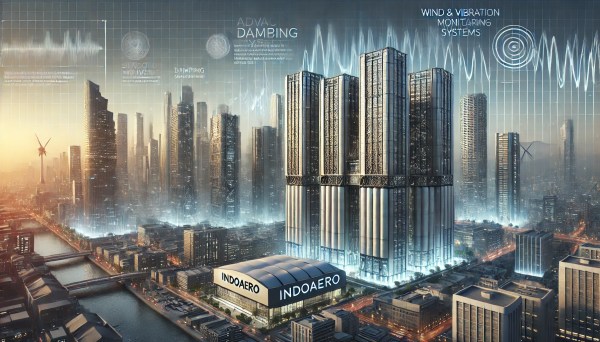
High-rise buildings are increasingly being constructed in urban areas worldwide, making accurate wind load estimation critical for structural safety and occupant comfort. Traditional wind load estimation relies on empirical formulas, wind tunnel testing, and computational fluid dynamics (CFD). However, these methods often require significant computational resources, time, and financial investment. Moreover, real-world wind conditions are complex, exhibiting nonlinear and stochastic behavior that conventional models struggle to capture. In response to these challenges, integrating data-driven methodologies and artificial intelligence (AI) into wind load estimation offers a promising solution. The estimation of wind loads on high-rise buildings is a critical aspect of structural engineering, particularly as urban environments evolve and the heights of buildings increase. Recent advancements in data-driven and artificial intelligence (AI) techniques have provided innovative methodologies for improving the accuracy and efficiency of wind load estimations. This synthesis explores various approaches that leverage computational fluid dynamics (CFD), machine learning, and hybrid models to enhance wind load predictions.
An Innovative Method for Wind Load Estimation in High-Rise Buildings Based on Data-Driven and AI Approaches



 INDOAERO